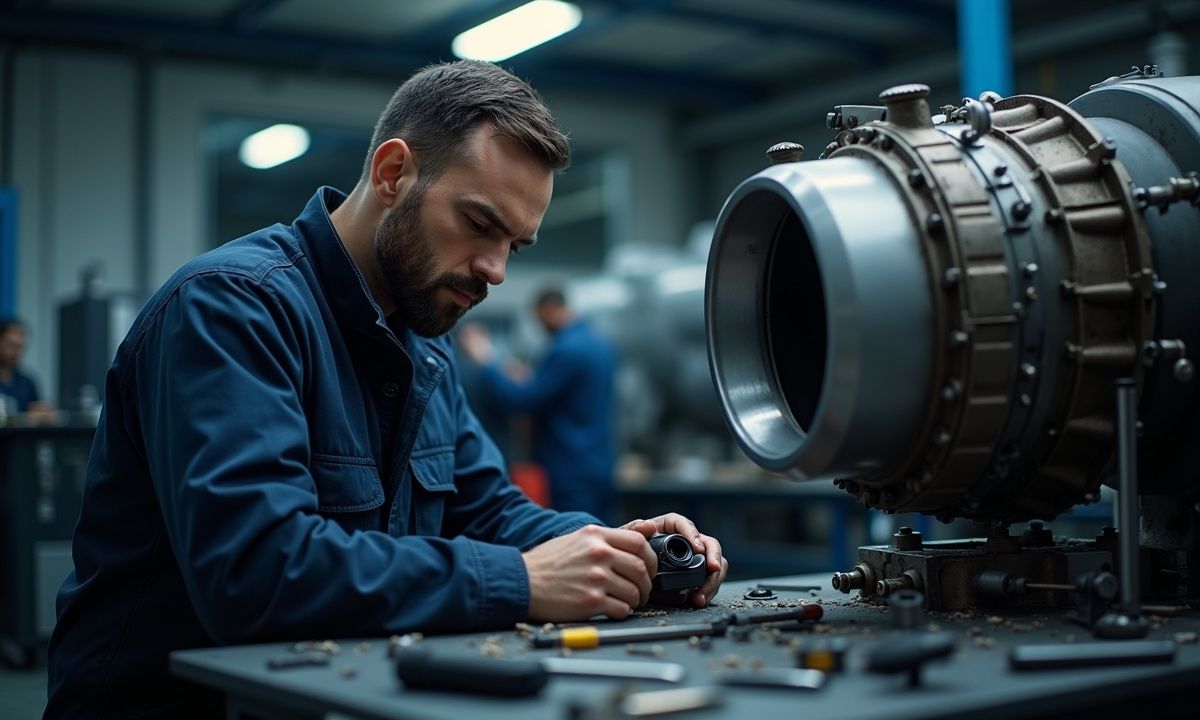
In the realm of aerospace engineering, few people realize that France stands alone in Europe with the capability to design and manufacture fighter jet engines of such exceptional precision. This remarkable feat is largely attributed to the expertise and resources of the French Directorate General for Armament (DGA), a government agency that plays a pivotal role in the nation’s defense capabilities. The intricacies of jet engine production are not only a testament to engineering prowess but also reflect France’s long-standing commitment to military innovation and technological advancement.
The Significance of Precision in Jet Engine Manufacturing
Fighter jet engines are among the most complex machines ever built. They operate under extreme conditions, requiring an unparalleled level of precision in their design and construction. This is where France’s capabilities shine brightly. The DGA, alongside several key aerospace manufacturers, has honed the skills and technologies necessary to produce engines that meet rigorous military standards. A miscalculation or defect in production can lead to catastrophic failures during flight, making precision a non-negotiable aspect of jet engine manufacturing.

For instance, the Snecma M88 engine, which powers the Dassault Rafale, exemplifies the high standards in French aerospace engineering. The M88 engine is designed not only for performance but also for adaptability, allowing it to operate effectively in various combat scenarios. This adaptability is a result of meticulous engineering processes that require a mastery of materials science, thermodynamics, and aerodynamics.
The Role of the DGA in Aerospace Innovation
The DGA is instrumental in maintaining France’s position as a leader in defense technology. Established in 1961, it oversees the development and procurement of armaments for the French armed forces. Its role extends beyond mere oversight; the agency actively participates in research and development, ensuring that France remains at the forefront of military technology.

One of the DGA's key initiatives involves fostering collaborations between public and private sectors. Partnerships with aerospace giants such as Safran and Dassault Aviation have resulted in groundbreaking advancements in engine technology. These collaborations allow knowledge sharing and innovation, driving the development of engines that are both efficient and powerful.
International Collaborations and Their Impact
While France is a leader in jet engine manufacturing, it is not working in isolation. The country collaborates with nations like Germany and Spain on various aerospace projects, contributing to a broader European defense strategy. These international partnerships facilitate the sharing of expertise and resources, bolstering France’s capabilities while also enhancing the overall strength of European defense.
For example, the Eurofighter Typhoon project, which involves multiple European nations, showcases how collaborative efforts can lead to significant advancements in aerospace technologies. France’s participation in such initiatives ensures that its engineers are continuously exposed to new ideas and methodologies, further refining their skills and capabilities.
The Economic and Strategic Importance of Jet Engine Manufacturing
The aerospace sector is a vital component of France’s economy, contributing billions of euros annually. The expertise in jet engine manufacturing not only secures jobs but also positions France as a key player in the global defense market. According to the Aerospace Technology Institute, the global defense market is projected to grow, making France’s capabilities increasingly significant.
Moreover, the strategic importance of having an independent jet engine manufacturing capability cannot be overstated. In a world where geopolitical tensions can escalate rapidly, the ability to produce advanced military technology ensures that France can maintain its defense autonomy. This self-reliance is crucial, particularly in times of international uncertainty.
Training the Next Generation of Engineers
As the aerospace industry evolves, so does the need for skilled engineers who can push the boundaries of what is possible. France invests heavily in education and training programs aimed at nurturing the next generation of aerospace engineers. Institutions like the École Polytechnique and ISAE-SUPAERO focus on providing students with the technical knowledge and practical experience necessary to excel in this field. These programs emphasize not only theoretical knowledge but also hands-on training, allowing students to engage with real-world challenges in aerospace engineering.
Furthermore, internships and partnerships with aerospace companies provide students with invaluable experience, ensuring they are well-prepared to enter the workforce upon graduation. As these graduates enter the industry, they carry with them fresh perspectives and innovative ideas that can further enhance France's capabilities in jet engine manufacturing.
The Future of French Aerospace Engineering
Looking ahead, the future of jet engine manufacturing in France appears bright. Continuous investments in research and development are paving the way for advancements that could redefine the industry. Emerging technologies, such as hybrid propulsion systems and the use of sustainable fuels, are being explored to align with global environmental goals while maintaining performance standards.
Few people realize the extent to which France is committed to not only maintaining its leadership in fighter jet engine production but also adapting to future challenges. The ongoing focus on innovation, collaboration, and education ensures that France will remain a key player in the aerospace sector for years to come.
In a world where technological advancements dictate military capabilities, France’s dedication to precision in jet engine manufacturing is not just a point of national pride but a crucial element of its defense strategy. As we witness the evolution of military technology, it is clear that the foundations laid by the DGA and its partners will continue to shape the future of aerospace engineering in Europe and beyond.
For those interested in understanding how personal habits can impact professional success, our article on Why people-pleasing quietly drains confidence: therapists explain this habit offers valuable insights into the psychological aspects of professional life.
As we consider the interconnectedness of various fields, one might reflect on how seemingly unrelated topics, such as plant biology, can reveal surprising truths about our understanding of the world. For example, Many people don’t realize it, but cauliflower, broccoli, and cabbage are all different varieties of the same plant, illustrating how knowledge is often layered beneath our everyday perceptions.

Comments (0)
No comments yet. Be the first to comment!
Leave a Comment