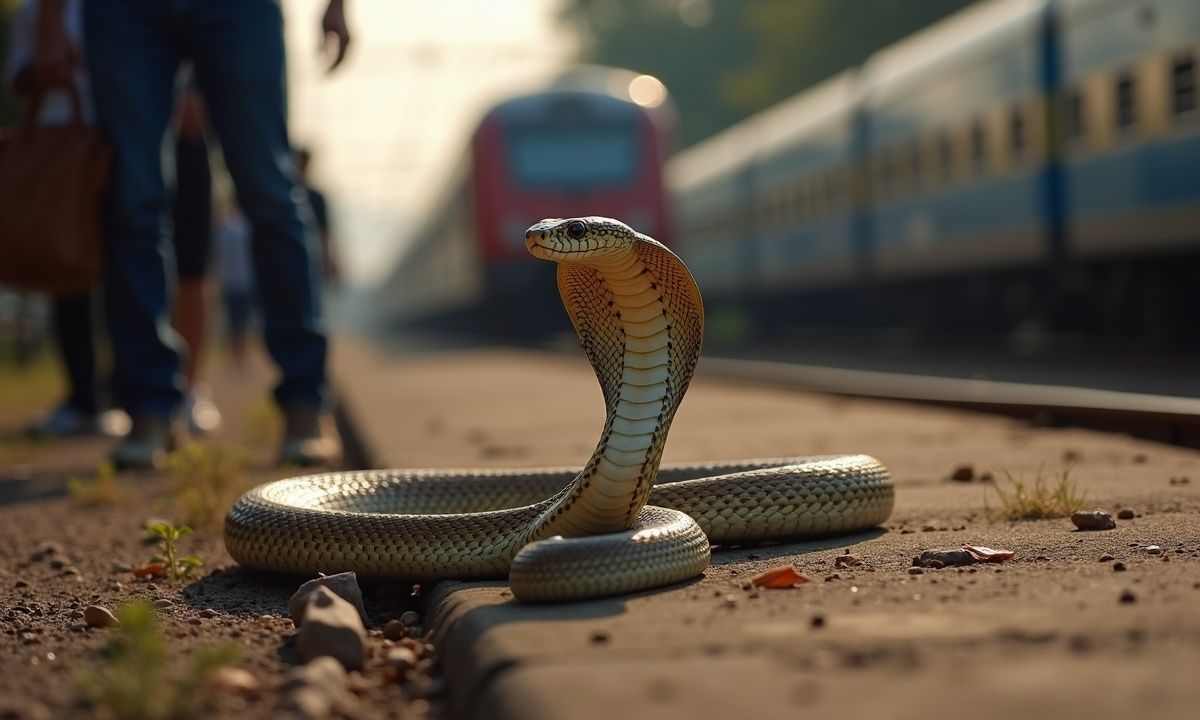
Curiosity on the Tracks
It seems king cobras have developed an unexpected affinity for train travel, bringing a new twist to our understanding of wildlife behavior. The world’s longest venomous snakes have been spotted slithering onto train platforms and even boarding trains, much to the surprise of passengers and railway personnel alike. This curious occurrence raises questions about their motives and the broader implications for both the snakes and human travelers.
Understanding the King Cobra
The king cobra, scientifically known as Ophiophagus hannah, is native to the forests and plains of Southeast Asia. Known for its impressive length, often exceeding 18 feet, this snake is capable of delivering a potent neurotoxin. Despite its fearsome reputation, the king cobra plays a crucial role in its ecosystem, helping to control populations of other snakes and small mammals. Yet, the idea of these snakes navigating human infrastructure is both fascinating and alarming.
Why Train Stations?
Train stations often serve as bustling hubs of activity, attracting various animals searching for food or shelter. The presence of king cobras in such areas could be linked to the availability of prey. Rodents are common around train stations, providing an easy meal for these serpents. As urban areas expand, wildlife encroaches on human spaces, leading to unexpected encounters. This phenomenon is not isolated to king cobras; various species have adapted to city life, seeking out food sources and new habitats.
Encounters with Humans
Reports of king cobras at train stations have sparked various reactions. Some travelers find themselves captivated by the sight of such a majestic creature, while others experience fear or panic. It's essential to understand how to respond if one encounters a king cobra. Experts recommend maintaining a safe distance and alerting local wildlife authorities, as these snakes are generally not aggressive unless threatened. Educational outreach is necessary to prepare the public for such encounters, emphasizing respect for wildlife and understanding their behaviors.
Wildlife Management Strategies
As urbanization continues to expand, wildlife management becomes crucial. Cities must implement strategies to mitigate human-wildlife conflicts. This can include creating wildlife corridors, enhancing green spaces, and providing education on local fauna. Cities like Singapore have made significant strides in integrating nature into urban planning, showcasing how humans and wildlife can coexist harmoniously. Effective management can help ensure that both human and animal populations thrive.
King Cobras and Their Ecosystem
King cobras play an integral role in their natural habitats. By preying on other snakes, including venomous species, they help maintain ecological balance. Their presence indicates a healthy ecosystem, as they require undisturbed environments to thrive. However, as their habitats face threats from deforestation and urban development, understanding their behavior in human-dominated landscapes becomes vital. Observing how these snakes adapt to changes can offer insights into broader environmental shifts.
Behavioral Adaptations
The ability of king cobras to adapt to urban environments reflects a broader trend among wildlife. Many species are learning to navigate human infrastructure, from raccoons foraging in garbage bins to coyotes roaming city streets. This adaptability raises questions about how wildlife will respond to climate change and habitat loss. Conservationists emphasize the importance of preserving natural spaces, as these areas are critical not only for wildlife but for human well-being as well.
Public Safety and Awareness
While king cobras are fascinating creatures, public safety must remain a priority. Raising awareness about the presence of these snakes in urban areas is essential. Educational programs can inform the public about what to do during an encounter, helping to reduce fear and promote coexistence. Additionally, conservation organizations play a pivotal role in advocating for snake protection and habitat preservation. Organizations like the National Geographic Society provide valuable resources on wildlife conservation efforts, educating the public about the importance of protecting these magnificent snakes.
Case Studies of King Cobra Sightings
Several reports have emerged from regions where king cobras have been spotted at train stations. For instance, in India, a king cobra was seen making its way through a bustling railway platform, causing a stir among passengers. Authorities quickly intervened to ensure the snake's safe removal and relocation to a more suitable habitat. Such incidents highlight the need for swift action and effective communication between wildlife authorities and the public. Similar strategies have been employed in various parts of Southeast Asia, where local communities have learned to coexist with these snakes.
Reflections on Coexistence
As we witness more encounters between humans and king cobras, it becomes clear that coexistence is essential. The rise in urban wildlife sightings should inspire us to rethink our relationship with nature. By fostering an understanding of wildlife behaviors and promoting responsible interactions, we can create environments where both humans and animals thrive. The fascination with king cobras on public transport serves as a reminder of the wild just beyond our city limits. It seems king cobras, with their striking appearance and vital ecological role, deserve our respect and protection.

Ultimately, the presence of king cobras in urban environments underscores the need for thoughtful wildlife management and public education. As we adapt to our changing world, we must find ways to harmonize our lives with the incredible diversity of life around us. For those interested in learning more about how to prepare for various social scenarios, consider reading Why overthinking social interactions keeps anxiety thriving, psychologists warn. Understanding our environment and the creatures within it can enhance our daily experiences and foster a deeper appreciation for the world we share.


Comments (0)
No comments yet. Be the first to comment!
Leave a Comment