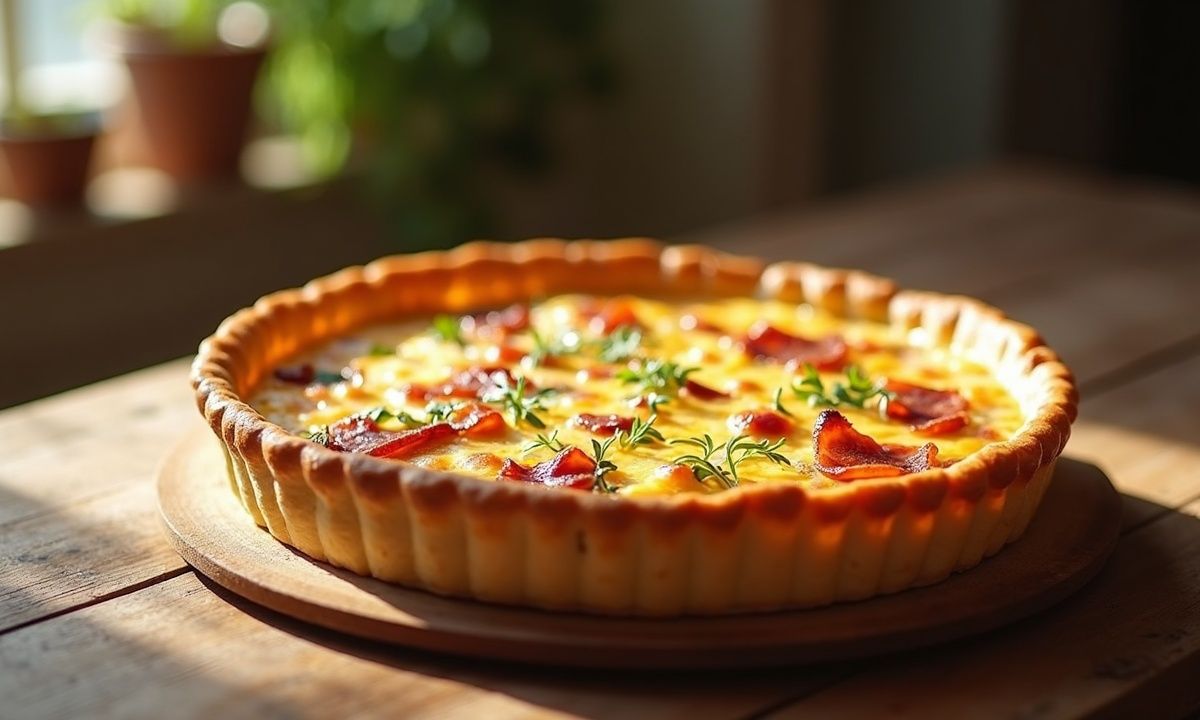
In the heart of French culinary tradition lies a dish that has transcended borders and generations: the quiche lorraine. This savory tart, with its creamy filling and delicate crust, is often associated with a flaky pastry base, yet many are unaware that this has not always been the case. Oubliez la pâte, as they say, for the true essence of the quiche lorraine dates back to the 16th century and reveals a fascinating culinary evolution.
A Historical Perspective
The origins of quiche lorraine can be traced back to the Lorraine region of France. Initially, this dish was a simple combination of cream, eggs, and lard baked in a bread dough. The concept of a pastry crust as we know it today was not a part of the original recipe. Bread dough was more accessible and practical, making it the preferred option for the early cooks. Interestingly, this simplicity reflects the resourcefulness of the time, where ingredients were utilized to their fullest potential.

As culinary customs evolved and travel across regions became more common, so did the ingredients and techniques used in cooking. By the 18th century, cream and cheese were becoming staples in many French dishes, and the quiche began to take shape into the version we recognize today. This transition marked the shift from a rustic dish to a more refined culinary experience, aligning with the broader changes in French gastronomy.
The Ingredients: A Closer Look
At its core, the traditional quiche lorraine includes just a handful of ingredients: eggs, cream, lardons (or bacon), and seasoning. Each component plays a vital role in achieving the dish's rich flavor profile and creamy texture. The lardons, for instance, not only add saltiness but also a savory depth that complements the smoothness of the egg and cream mixture.

In modern adaptations, however, quiches often incorporate various cheeses, vegetables, and herbs, reflecting a shift towards personalization and creativity in the kitchen. While these variations are delightful, they sometimes overshadow the humble beginnings of the quiche lorraine. For those who appreciate the historical significance of this dish, sticking to the original recipe provides a taste of tradition.
Regional Variations
The beauty of quiche lies in its versatility, which has led to numerous regional adaptations. For instance, in Alsace, a similar dish known as "flammekueche" uses a thin bread dough, topped with crème fraîche, onions, and bacon. This demonstrates how local ingredients and preferences influence culinary practices across France. Each region has its flair, yet the essence of quiche remains rooted in its Lorraine origins.
Modern Takes on a Classic
Today, chefs and home cooks alike have embraced the quiche, experimenting with flavors and textures. One might find quiches filled with seasonal vegetables like asparagus or spinach, or even more exotic ingredients such as smoked salmon or goat cheese. These innovations keep the dish relevant and exciting for new generations. However, while creativity is encouraged, the spirit of the original quiche lorraine can still be honored by focusing on the quality of ingredients.
For an authentic experience, consider sourcing local eggs and fresh cream. This not only supports local farmers but also enhances the flavor of the finished dish. A quiche made with high-quality ingredients will always stand out, regardless of the variations you choose to incorporate.
Cultural Significance of Quiche Lorraine
Beyond its delicious taste, quiche lorraine holds cultural importance in France. It is often served during celebrations and gatherings, symbolizing comfort and togetherness. The dish has become a staple in French bistros and cafes, showcasing the country's rich culinary heritage to visitors from around the world. It speaks to the essence of French cooking: simple yet profound, relying on quality ingredients and straightforward techniques.
Moreover, the act of sharing a quiche at a family gathering or a picnic resonates deeply with the notion of community. It is not just a meal but an experience, one that brings people together over food. This cultural connection is a significant aspect of why the quiche remains beloved across generations.
Practical Tips for Perfecting Quiche
If you're inspired to create your own version of quiche lorraine, here are a few practical tips to ensure success:
- Use a blind baking technique for the crust if you opt for a traditional pastry base. This prevents sogginess and ensures a crispy texture.
- Let the filling cool slightly before baking. This helps in achieving a perfectly set quiche.
- Experiment with different herbs. A sprinkle of nutmeg or fresh chives can elevate the flavors beautifully.
For more details on culinary traditions and tips, check our article on Avis aux clients Picard, avez-vous pris connaissance de cet avantage précieux en magasin avec la carte de fidélité ?.
Conclusion
Oubliez la pâte, and embrace the rich history and flavors of the quiche lorraine. Understanding its origins encourages a deeper appreciation for this beloved dish, reminding us of the beauty in simplicity and tradition. Whether you stick to the classic ingredients or venture into modern interpretations, the quiche lorraine remains a testament to the enduring legacy of French cuisine. So, gather your ingredients and share a slice with family and friends, celebrating both history and flavor in every bite.

Comments (0)
No comments yet. Be the first to comment!
Leave a Comment