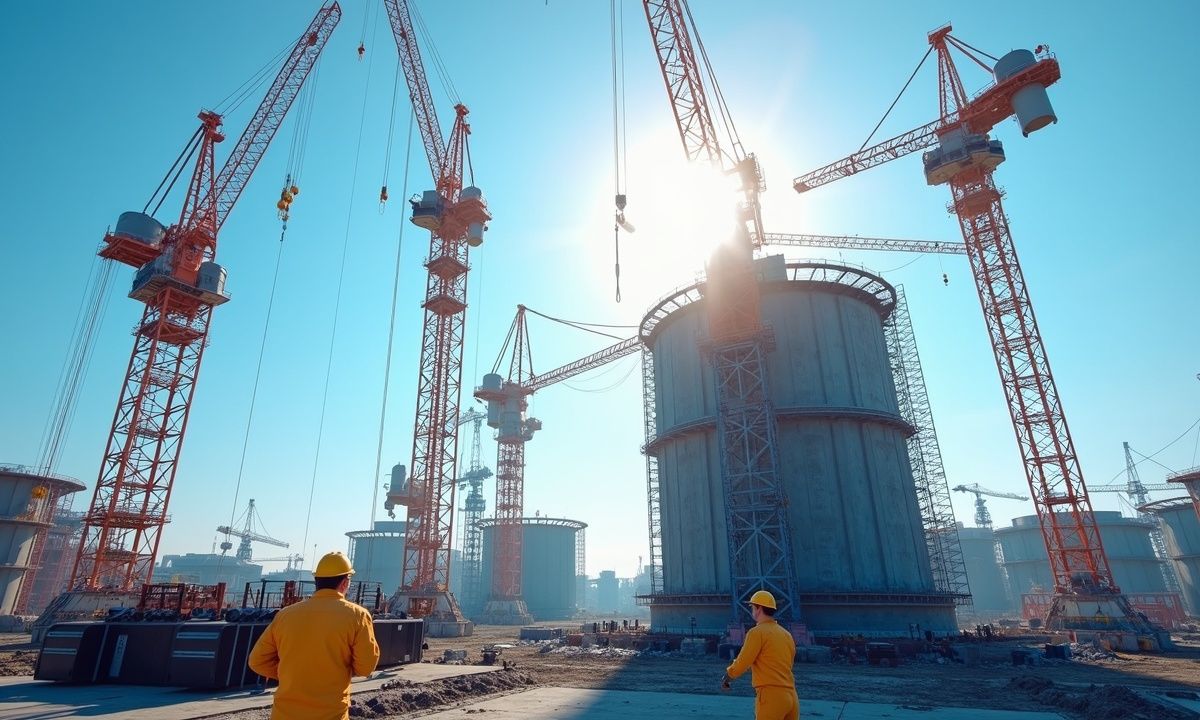
The UK is Building a “Monster” for Nuclear Fusion
In a world increasingly focused on sustainable energy, the UK is stepping up its game with a bold new project aimed at achieving nuclear fusion. The ambitious endeavor, often referred to as building a “monster,” involves the construction of a machine designed to twist plasma in all directions. This innovative approach could potentially push humanity closer to realizing the dream of clean, limitless energy. As the global energy landscape shifts, the implications of this project are both profound and far-reaching.
The Journey to Fusion
Nuclear fusion has long been hailed as the “holy grail” of energy production. Unlike nuclear fission, which splits heavy atoms to release energy and can produce hazardous waste, fusion combines light atoms, such as hydrogen isotopes, to form helium, releasing vast amounts of energy in the process. The challenge has always been achieving the conditions necessary for fusion to occur: extreme temperatures and pressures similar to those found in the sun.

The UK’s latest initiative, spearheaded by the UK Atomic Energy Authority (UKAEA), aims to create a new type of fusion reactor called the Spherical Tokamak for Energy Production (STEP). This facility will employ advanced technology to manipulate plasma—essentially a superheated gas made up of charged particles—allowing it to maintain stability long enough to produce energy. The design of the STEP reactor is particularly interesting because it seeks to twist plasma in various directions, enhancing containment and efficiency.
Why This Matters
The implications of successfully harnessing nuclear fusion are immense. For one, fusion could serve as a nearly inexhaustible source of energy. With hydrogen readily available from water, fusion could provide a sustainable energy solution for generations to come. Furthermore, it produces no long-lived radioactive waste, addressing one of the most significant concerns associated with current nuclear technology.

Global interest in fusion research is growing, with countries like the United States, China, and members of the European Union investing heavily in their own projects. The UK’s STEP initiative not only positions the country as a leader in this field but also reinforces its commitment to achieving net-zero carbon emissions by 2050. This aligns with broader efforts globally to transition from fossil fuels to cleaner energy sources, as outlined by organizations like the International Energy Agency.
The Science Behind the “Monster”
At the heart of the STEP reactor is its innovative design, which employs a spherical shape to improve plasma containment. Traditional tokamaks, which are doughnut-shaped, often struggle with plasma stability, leading to energy losses. By twisting the plasma in all directions, the UK’s project aims to create a more stable environment that could lead to sustained fusion reactions.
Moreover, the research surrounding this technology involves collaboration with various universities and research institutions, fostering a culture of innovation. For instance, advancements in superconducting materials and magnetic confinement systems are crucial to the success of fusion reactors. These materials help create stronger magnetic fields, which are essential for containing the hot plasma without it touching the reactor walls.
Real-World Applications
While fusion technology is still in its infancy, the potential applications extend far beyond just energy production. For example, if successful, fusion could lead to breakthroughs in various industries, including transportation, where hydrogen fuel could replace traditional fossil fuels, significantly reducing carbon footprints. Furthermore, the technology could play a pivotal role in providing energy for remote locations or even for future space missions, where traditional energy sources may not be viable.
Additionally, the collaboration among scientists and engineers in this field could spur advancements in related technologies. Take, for instance, the development of more efficient batteries or novel methods of energy storage, which are crucial for managing renewable energy sources like wind and solar. As noted in our article on The French nuclear giant exports its expertise to the Middle East’s first nuclear plant: Barakah, international cooperation in nuclear technology can lead to shared knowledge and practices that benefit multiple countries.
Challenges Ahead
Despite the promising outlook, challenges remain on the road to achieving viable nuclear fusion. The technical hurdles are significant, with researchers still grappling with how to maintain the necessary conditions for fusion over extended periods. Funding is also a critical factor; while the UK government has committed substantial resources to the STEP project, continued investment will be essential to keep pace with international competitors.
Moreover, public perception of nuclear energy can be a barrier. Many people associate nuclear power with the dangers of fission reactors and the historical accidents that have occurred. Educating the public on the differences between fusion and fission, along with the safety measures in place, will be vital for gaining support for projects like STEP.
Looking to the Future
As the UK forges ahead with its fusion ambitions, the potential for significant advancements in energy production is palpable. The STEP project not only represents a technological leap but also a step toward a more sustainable future. For those interested in the broader implications of energy decisions, understanding the psychology behind risk and opportunity can also be beneficial. Our article on Why the fear of rejection makes you avoid opportunities: counselors reveal the pattern sheds light on how fear can inhibit progress, a concept that resonates in discussions about the future of energy.
The UK is not just building a reactor; it is laying the groundwork for a new energy paradigm. As the world grapples with climate change and seeks alternatives to fossil fuels, initiatives like STEP could pave the way for a cleaner, more abundant energy future. The journey is long, but the destination could redefine how humanity interacts with energy.

Comments (0)
No comments yet. Be the first to comment!
Leave a Comment