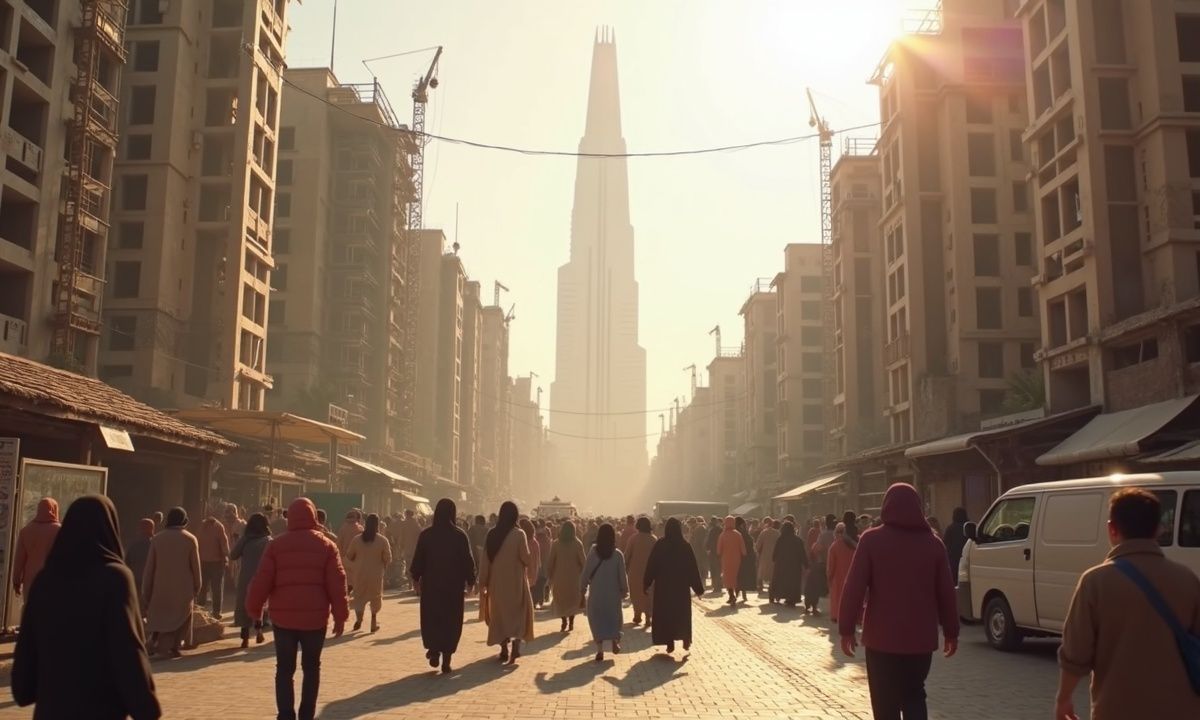
The world’s gone mad, or so it seems, as Saudi Arabia announces plans for a skyscraper that will reach an astonishing 1 kilometer into the sky. This ambitious project is part of a broader vision for the Kingdom, aimed at transforming its urban landscape and positioning itself as a beacon of modernity. Yet, while the nation invests billions into this audacious venture, ordinary citizens grapple with rising housing costs, making the dream of homeownership increasingly elusive. The juxtaposition of luxury and struggle in this context has sparked debate and division not just within Saudi Arabia, but across the globe.
The Skyscraper That Aims to Touch the Clouds
Named the Jeddah Tower, this architectural marvel is set to redefine the skyline of Jeddah. The tower is more than just a building; it's a symbol of ambition, a manifestation of Saudi Arabia's Vision 2030, which seeks to diversify the economy and reduce dependence on oil. The project's backers argue that the Jeddah Tower will attract tourists, create jobs, and promote international investment. However, the massive financial outlay raises questions about priorities in a nation where many still struggle to afford basic housing.

As construction progresses, the cost per square meter in areas surrounding the tower has surged, pushing local residents further away from potential homeownership. In a country where over 60% of the population is under 30, the dream of owning a home feels increasingly out of reach. This has led to a rising frustration among young people who see their aspirations overshadowed by grandiose projects that seem disconnected from their daily realities.
The Cost of Ambition
As the Jeddah Tower takes shape, the stark economic divide is becoming more pronounced. According to recent reports, property prices in Saudi Arabia have soared by as much as 20% in the past year alone. This trend isn't limited to the luxury market; middle-class families are feeling the squeeze too. Many are forced to consider renting instead of buying, which further complicates their financial futures.

While the Saudi government promotes affordable housing initiatives, critics argue that these efforts often fall short. The construction of opulent skyscrapers contrasts sharply with the ongoing housing crisis. In a country where the government aims to provide homes for its citizens, the reality is that many are still living in overcrowded conditions or in less desirable areas.
The Global Perspective
This phenomenon isn't just a localized issue. The world’s gone mad when we observe similar patterns across the globe. In cities like San Francisco and London, housing markets have become battlegrounds for the wealthy, leaving average earners struggling to find suitable accommodation. The Jeddah Tower serves as a reminder that while some cities race toward extravagant projects, many residents remain trapped in a cycle of unaffordable living conditions.
As urban centers increasingly cater to affluent residents and investors, the plight of ordinary citizens becomes more pronounced. Cities worldwide are grappling with the challenge of ensuring that growth benefits everyone, not just the elite. This is particularly relevant in the context of sustainable development, where cities must balance ambition with the welfare of their citizens.
Voices of Dissent
The construction of the Jeddah Tower has not gone without criticism. Activists and concerned citizens have taken to social media to voice their discontent. Many argue that the funds allocated for such extravagant projects could be better spent on essential services such as education, healthcare, and affordable housing. These voices are gaining traction, highlighting a growing demand for transparency and accountability in government spending.
Moreover, this project has raised questions about the environmental impact of such a massive structure. Critics point to the resources required for construction and the long-term sustainability of maintaining a building of this scale. With climate change becoming an undeniable reality, the focus on monumental constructions must be balanced with ecological considerations.
Lessons from Other Nations
Looking at examples from other nations, we see the importance of community engagement in urban planning. In countries like Denmark, urban development projects often involve public consultations, allowing citizens to voice their opinions and concerns. This approach fosters a sense of ownership among residents and ensures that developments meet community needs, rather than simply catering to luxury markets.
Saudi Arabia could benefit from adopting similar practices, integrating the aspirations of everyday people into its grand designs. This could lead to a more balanced approach to development, one that respects the needs of all citizens while still pursuing ambitious projects.
Finding a Middle Ground
While the Jeddah Tower stands as a testament to human ingenuity, it also serves as a cautionary tale. The stark contrast between opulence and the struggles of ordinary citizens highlights a critical need for balance. As the world watches this monumental project unfold, there is a growing call for a more equitable approach to urban development.
In many ways, the success of such projects should not be measured solely by their architectural grandeur but by their impact on the community. Are they creating jobs? Are they ensuring that citizens have access to affordable housing? Are they fostering a sense of community rather than division? These are the questions that must be addressed as Saudi Arabia continues to carve its path in the global arena.
A Call for Reflection
The world’s gone mad, indeed, if we allow our cities to become playgrounds for the wealthy while neglecting the very people who inhabit them. As the Jeddah Tower rises, so too must the voices of those who demand a more inclusive future. It is imperative that nations balance ambition with responsibility, ensuring that every citizen’s dream of homeownership is not just a distant fantasy but a tangible reality.
As we ponder the lessons from this unfolding narrative, it is essential to recognize that true progress lies in the ability to harmonize grand ambitions with the needs of the many. Only then can we hope to build a future where everyone has a place to call home.

Comments (0)
No comments yet. Be the first to comment!
Leave a Comment