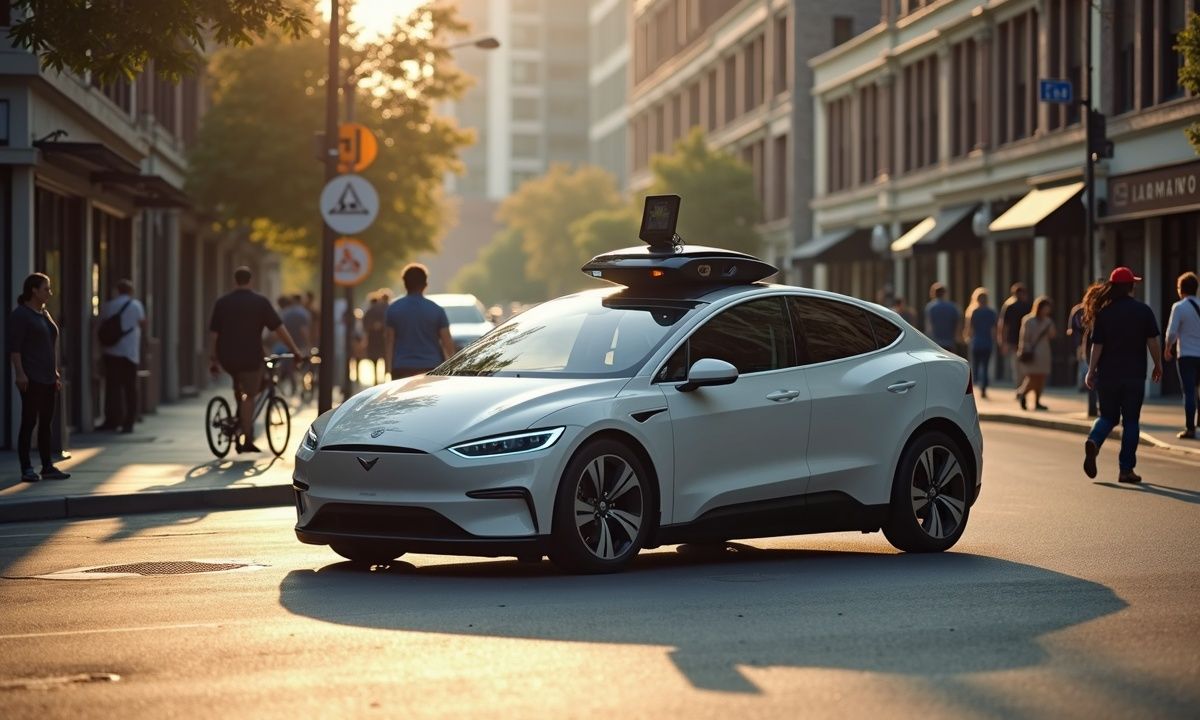
As autonomous vehicles inch closer to becoming a common sight on our roads, the complexity behind their operation continues to grow. At the forefront of this technological evolution is the Waymo AI World Model, an ambitious initiative by Waymo, a subsidiary of Alphabet Inc. This model is not only a significant step in the landscape of self-driving cars but also plays a pivotal role in shaping the future of artificial intelligence in transportation. With the introduction of the Genie 3 framework, Waymo is setting the stage for advancements that could redefine mobility.
The Waymo AI World Model: A New Approach to Autonomous Driving
The Waymo AI World Model harnesses vast amounts of data collected from real-world driving scenarios to train its algorithms. This data-driven approach allows the vehicle to anticipate and react to the unpredictable nature of human behavior on the road. Unlike traditional models that may rely heavily on predefined rules, the AI World Model learns continuously, updating its knowledge base with every mile driven.
Real-World Applications
Imagine waiting at a busy intersection. A pedestrian suddenly darts into the street, while a cyclist approaches from the left. The Waymo vehicle, equipped with its AI World Model, processes these inputs in real-time, predicting potential conflicts and making swift decisions to ensure safety. Such scenarios highlight the model's capability to adapt to dynamic environments, a critical factor in public acceptance of autonomous technology.
Integration with Genie 3: A Step Forward
Genie 3, developed by Google DeepMind, represents the latest iteration of AI frameworks designed to enhance machine learning capabilities. The integration of Waymo's AI World Model with Genie 3 offers a new layer of sophistication. By utilizing Genie 3's neural architecture, Waymo can refine its decision-making processes and improve its predictive capabilities.

This collaboration exemplifies how different sectors of AI can come together to solve complex challenges. For example, Genie 3’s ability to model high-dimensional spaces can assist in understanding intricate urban environments, which are often fraught with challenges for autonomous vehicles. As cities become smarter, the demand for such sophisticated models will only grow.
Challenges on the Road Ahead
Despite the promising advancements, the road to widespread adoption of autonomous vehicles is not without hurdles. Regulatory frameworks lag behind technological development, creating uncertainties for companies like Waymo. Additionally, public perception remains a significant barrier. Concerns about safety and privacy could impede the acceptance of self-driving cars. The Waymo AI World Model must not only demonstrate technical proficiency but also gain the trust of potential users.
The Economic Implications of Autonomous Driving
As the Waymo AI World Model matures, its economic impact becomes a focal point for investors and policymakers alike. The potential for reduced transportation costs, increased efficiency, and a decrease in traffic accidents presents a lucrative opportunity. Experts suggest that the autonomous vehicle market could reach trillions of dollars in the coming decades, fundamentally altering urban planning and the logistics industry.

Moreover, the model's capability to reduce human error in driving could lead to significant savings in healthcare costs related to traffic accidents. According to the National Highway Traffic Safety Administration, tens of thousands of lives could be saved annually if autonomous technology is adopted widely.
Global Competitors and Technological Landscape
Waymo is not alone in this race. Companies like Tesla, Cruise, and international players from countries such as China are also developing autonomous driving technologies. A recent article highlighted how Chinese open models are gaining traction, providing affordable alternatives that challenge Western pricing structures in AI development. This competitive landscape pushes companies to innovate continuously, ensuring that advancements in the Waymo AI World Model remain significant.
The Path Forward: Investments and Infrastructure
Investment in infrastructure compatible with autonomous vehicles is essential for the successful deployment of Waymo's technology. Smart traffic signals, updated road signage, and dedicated lanes for self-driving cars could facilitate smoother operations. Collaboration between government bodies and private enterprises will be crucial in creating an ecosystem where autonomous vehicles can thrive.
Additionally, the Waymo AI World Model could be a cornerstone in the development of smart cities. By integrating traffic management systems with AI, urban planners can optimize traffic flow, reduce congestion, and lower carbon emissions. The potential for synergy between city infrastructure and autonomous driving technology opens up a world of possibilities.
Community Acceptance: Building Trust
For all the technical prowess of the Waymo AI World Model, its success ultimately hinges on public trust. Engaging communities through informative campaigns and public demonstrations can help demystify the technology. Real-world testing, coupled with transparent communication about safety measures, will be vital in winning over skeptics.
Moreover, the partnership between Waymo and local governments to create pilot programs can serve as a testing ground. By addressing concerns and showcasing the benefits in controlled environments, communities can gradually familiarize themselves with the technology.
A Future Shaped by AI
The Waymo AI World Model represents a significant leap toward a future where autonomous vehicles are integral to everyday life. As this technology develops, the interplay between AI advancements and societal readiness will determine its trajectory. The ongoing collaboration with initiatives like Genie 3 only underscores the potential for growth and improvement in this field. As we navigate the complexities of adopting autonomous driving, one thing remains clear: the journey has just begun, and the destination holds great promise.

Comments (0)
No comments yet. Be the first to comment!
Leave a Comment