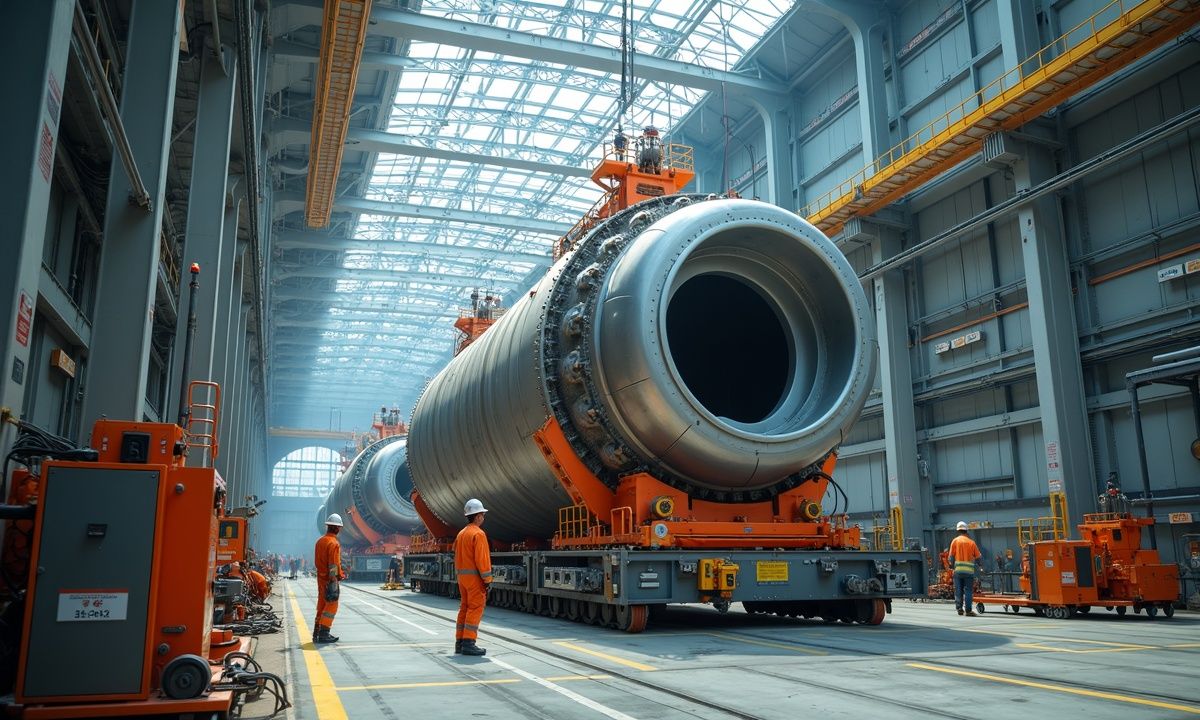
On a warm day in southern France, a remarkable development is taking place at the ITER facility, a hub of scientific ambition and hope. The recent installation of vacuum chamber module number five has stirred excitement among physicists and engineers alike. Nuclear fusion is no longer a distant dream; it is inching closer to realization. This monumental project aims to replicate the sun's energy production process, providing a nearly limitless source of clean energy for future generations.
The Significance of the ITER Project
ITER, which stands for International Thermonuclear Experimental Reactor, represents one of the most ambitious energy projects ever undertaken. It brings together 35 nations in a collaborative effort to unlock the potential of nuclear fusion. Unlike nuclear fission, which splits atoms and produces radioactive waste, nuclear fusion merges atomic nuclei to release vast amounts of energy with minimal environmental impact.

As the world grapples with climate change and the urgent need for sustainable energy sources, the ITER project stands as a beacon of hope. The fusion process has the potential to provide an energy output that far exceeds current technologies while producing little to no greenhouse gas emissions. In an era where energy security is paramount, ITER's advancements are crucial.
Recent Milestones and Achievements
The installation of vacuum chamber module number five is a significant milestone, representing the ongoing progress of the ITER project. This module is part of a series of chambers that will house the plasma where fusion reactions will occur. Each module plays a vital role in creating the conditions necessary for nuclear fusion to take place.

As construction continues, ITER has faced numerous challenges, but it has also achieved remarkable progress. The project has already completed other essential components, such as the cryostat and the superconducting magnets. These elements are critical for maintaining the extreme temperatures and pressures required for fusion reactions to occur.
Understanding Nuclear Fusion
Nuclear fusion is the process that powers our sun and stars. It occurs when two light atomic nuclei combine to form a heavier nucleus, releasing energy in the process. For ITER, the primary fuel is isotopes of hydrogen, specifically deuterium and tritium. When these isotopes collide at extremely high temperatures, they can overcome their natural repulsion and fuse, resulting in helium and a neutron.
The energy produced from fusion is immense. In fact, just a small amount of fusion fuel can generate energy equivalent to several tons of coal. As a result, the prospects for using nuclear fusion as a clean energy source are incredibly promising. However, achieving the necessary conditions for fusion on Earth has proven to be a monumental challenge.
Global Collaboration and Challenges
The ITER project is a testament to international cooperation. With contributions from Europe, the United States, Russia, Japan, China, South Korea, and India, the project embodies a united front in addressing global energy challenges. However, collaboration on such a grand scale is not without its hurdles. Political, financial, and technical obstacles have arisen throughout the project's development.
Moreover, the technical challenges of maintaining a controlled fusion reaction are significant. Plasma must be heated to temperatures exceeding 150 million degrees Celsius—over seven times hotter than the sun's core. Additionally, the magnetic confinement systems must be finely tuned to keep the plasma stable and prevent it from touching the reactor walls, which could lead to catastrophic failures.
The Future of Nuclear Fusion
As ITER progresses, the hope is that it will pave the way for commercial fusion energy plants. The successful demonstration of sustained fusion reactions could lead to a new era of energy production. Countries are already looking ahead, investing in research and development to prepare for the potential commercialization of fusion technology.
Beyond ITER, other fusion projects are being pursued worldwide. For instance, private companies like Helion Energy and Tokamak Energy are developing their fusion reactors, aiming to achieve practical energy generation sooner. These ventures reflect an growing interest in nuclear fusion as a viable and sustainable energy source.
Real-World Applications and Impacts
The implications of successfully harnessing nuclear fusion are enormous. With the capacity to provide constant, clean energy, fusion could significantly reduce reliance on fossil fuels. This shift would play a crucial role in mitigating climate change and reducing air pollution.
Moreover, nuclear fusion offers a solution to energy security. Many countries face challenges in sourcing energy from unstable regions or through environmentally damaging processes. The ability to generate energy locally through fusion could lead to greater independence and stability in energy supply.
Public Perception and Education
Despite its potential, nuclear fusion remains relatively unknown to the general public. Misunderstandings and fears surrounding nuclear technology often overshadow the benefits associated with fusion. Public education and outreach are essential for fostering support and interest in fusion research.
Engaging communities through interactive demonstrations and educational programs could help demystify nuclear fusion. For instance, schools could incorporate discussions around energy sources, including the science behind nuclear fusion, into their curricula. By understanding the basics, the next generation may develop a more favorable view of nuclear fusion as a clean alternative.
As interest grows in sustainable practices, discussions around topics like boiling lemon peel, cinnamon, and ginger can also tie into broader themes of natural remedies and environmental consciousness. Just as people are turning to healthier lifestyles, the pursuit of clean energy solutions like fusion will likely resonate with those looking to make a positive impact.
The Road Ahead for ITER
Looking towards the future, the ITER project has set ambitious timelines for achieving its goals. The next significant phase involves plasma operations, where the various systems will be tested to ensure they can handle the extreme conditions of fusion. This phase is crucial in determining the project's success and the feasibility of fusion as a widespread energy source.
As countries grapple with energy demands and climate goals, the lessons learned from ITER will undoubtedly shape the future of energy policy. The project's findings may influence how nations approach energy generation, storage, and consumption.
Final Thoughts
Nuclear fusion is becoming less and less unattainable, especially with recent milestones like the installation of vacuum chamber module number five at ITER. The road ahead may still be fraught with challenges, but the potential benefits of fusion energy are compelling. As the world seeks sustainable solutions to energy crises, the developments at ITER offer a glimpse into a brighter, cleaner future.
In the grand scheme of things, the fusion journey is not just about energy; it reflects humanity's relentless pursuit of knowledge and progress. As we inch closer to harnessing the power of the stars, we come closer to realizing a sustainable and resilient energy future.
Sources

Comments (0)
No comments yet. Be the first to comment!
Leave a Comment