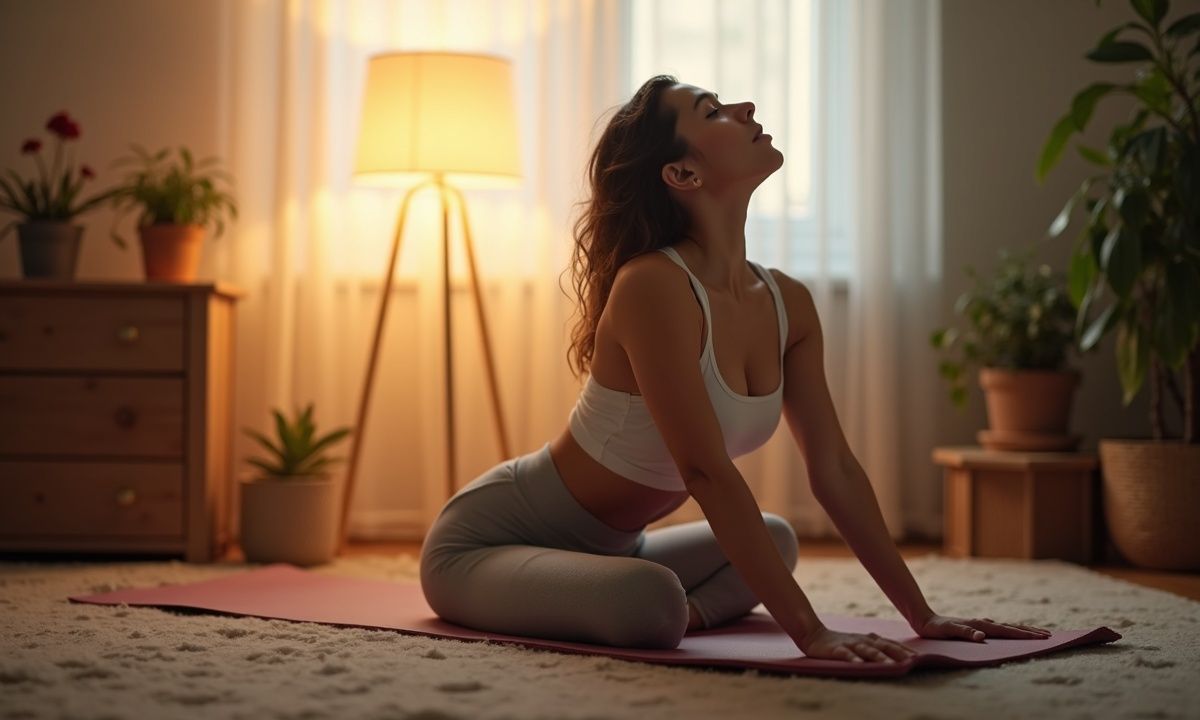
As the day winds down, the need for restorative sleep becomes more urgent. Many of us toss and turn, caught in a cycle of restless thoughts and physical discomfort. If you find yourself lying awake at night, it might be time to consider incorporating a gentle yoga routine into your evening ritual. Try these 5 yoga poses to set the stage for a better night’s rest, allowing your body and mind to unwind and prepare for sleep.
Child’s Pose
Child’s Pose, or Balasana, is a foundational yoga position that promotes relaxation. It stretches the spine, hips, and thighs while calming the mind. To practice this pose, begin by kneeling on the floor. Sit back on your heels and fold forward, extending your arms in front of you or alongside your body. Allow your forehead to rest on the mat, feeling the gentle pressure soothe your thoughts.

This pose encourages deep breathing, which can reduce anxiety levels. According to the National Institute of Mental Health, engaging in deep, mindful breathing can help alleviate stress, which is vital for a restorative sleep experience.
Legs Up the Wall
Legs Up the Wall, or Viparita Karani, is a restorative pose that helps alleviate tension in the legs and lower back. This pose is especially beneficial for those who spend long hours on their feet. To perform this pose, sit next to a wall, lie back, and extend your legs up the wall. Your body should form an L-shape. Rest here for several minutes, focusing on your breath.

This position encourages circulation and can help reduce feelings of fatigue. Many individuals find that after just a few minutes, they feel more relaxed and ready for sleep. It’s a great way to signal to your body that it’s time to wind down.
Reclining Bound Angle Pose
Reclining Bound Angle Pose, or Supta Baddha Konasana, opens the hips and promotes relaxation. To achieve this pose, lie on your back and bring the soles of your feet together. Allow your knees to gently fall out to the sides. You can place your hands on your belly or extend them alongside your body, whichever feels most comfortable.
This position can be particularly soothing, as it encourages a gentle stretch while your body is supported by the ground. Adding some soft music or calming scents, like lavender, can enhance this experience, creating an environment conducive to sleep.
Seated Forward Bend
The Seated Forward Bend, known as Paschimottanasana, is a calming pose that stretches the spine and hamstrings. Sit with your legs extended in front of you. Inhale deeply, then exhale as you fold forward, reaching for your feet or shins. The goal is to maintain a long spine rather than forcing your body to touch your toes.
This pose encourages relaxation and helps clear the mind. It can be particularly helpful for those who experience racing thoughts at night. As you focus on your breath and the sensations in your body, you may find that your thoughts begin to slow down, making it easier to drift into sleep.
Corpse Pose
the Corpse Pose, or Savasana, is essential for integrating the benefits of your yoga practice. Lie flat on your back with your legs slightly apart and arms resting at your sides, palms facing up. Close your eyes and focus on your breath, allowing your body to completely relax.
This pose encourages you to be present and mindful, providing a final opportunity to release any remaining tension before sleep. According to The Sleep Foundation, mindfulness practices such as yoga can significantly improve sleep quality by reducing anxiety and promoting relaxation.
Creating a Routine
Incorporating these poses into your evening routine can create a calming ritual that signals to your body that it’s time to wind down. Consider setting aside 15-20 minutes each evening to practice these stretches. You might find it beneficial to dim the lights, play soft music, or use calming scents to create a peaceful environment.
Moreover, a consistent practice can lead to long-term benefits. Many people who create a bedtime yoga routine report not only improved sleep but also a greater sense of calm throughout their day. The journey to better sleep can often begin with simple, mindful moments like these.
Practical Considerations
Before starting any new exercise routine, including yoga, it's wise to listen to your body. If you have any medical concerns or physical limitations, consider consulting with a healthcare professional or a certified yoga instructor. They can provide guidance tailored to your needs.
Additionally, choose a space where you feel comfortable and undisturbed. The environment can significantly affect your ability to relax and focus during your practice. A tranquil space can enhance your experience, making it easier to transition into sleep afterward.
As you try these 5 yoga poses for a better night’s rest, remember that your journey towards improved sleep quality is personal. It may take time to find the right routine and poses that resonate with you. In the meantime, you might also be interested in related topics, like In 2026, these four zodiac signs are expected to reach millionaire status as fortune aligns in their favor. or how AI is changing the job landscape. Each step you take towards understanding your body and its needs can pave the way for better rest and overall well-being.
As the world continues to speed up, finding ways to slow down becomes even more vital. Embracing these yoga practices not only aids in achieving restful sleep but also fosters a deeper connection to your body and its rhythms. Here’s to a peaceful night and the rejuvenation that comes with it.

Comments (0)
No comments yet. Be the first to comment!
Leave a Comment